Yellow Dock Herbs: Uses And Control Of Curly Dock Plants
Yellow dock is the perfect example of the aphorism "someone's poison is another person's nutrient." Some people expect at this plant, and all they see is an invasive and toxic establish. But other more imaginative types would encounter a delicious herb with nutritious leaves and stems. If you like to aggrandize your culinary horizons, you lot can use the green leaves raw in salads or add them to soups and stews for extra exquisite flavors.
But you take to exist careful since the yellow dock is an invasive plant on top of being toxic as well. Then it'south not recommended that you grow information technology in your garden. As well, many states prohibit planting yellow dock because of its invasiveness. These, however, are not the simply precautions you need to accept when dealing with this herb. Read more than to learn how to identify, harvest, and command this controversial plant.
How to Place Yellow Dock
Even if the xanthous dock (Rumex crispus) is not growing in your garden, you still need to be able to identify it. The herb grows in the wild, and if you're in the habit of going foraging, chances are you'll come across this herb.
A native of Europe and the western parts of Asia, the herb goes past many names. In some parts, people call information technology curly dock, while in others, information technology is known as curled dock. But whatsoever the proper noun, the constitute ever has the aforementioned rosette base where leaves and shoots grow out of information technology.
The leaves are shine, long, and narrow. The edges of the leaves are wavy and a little jagged. When they're young, the leaves are often bright greenish, just once the flowers bloom, the leaves turn brown and get inedible. Near the base, the leaves are about 12 inches long and two and a half inches broad, simply they get smaller and smaller equally y'all movement up the stem.
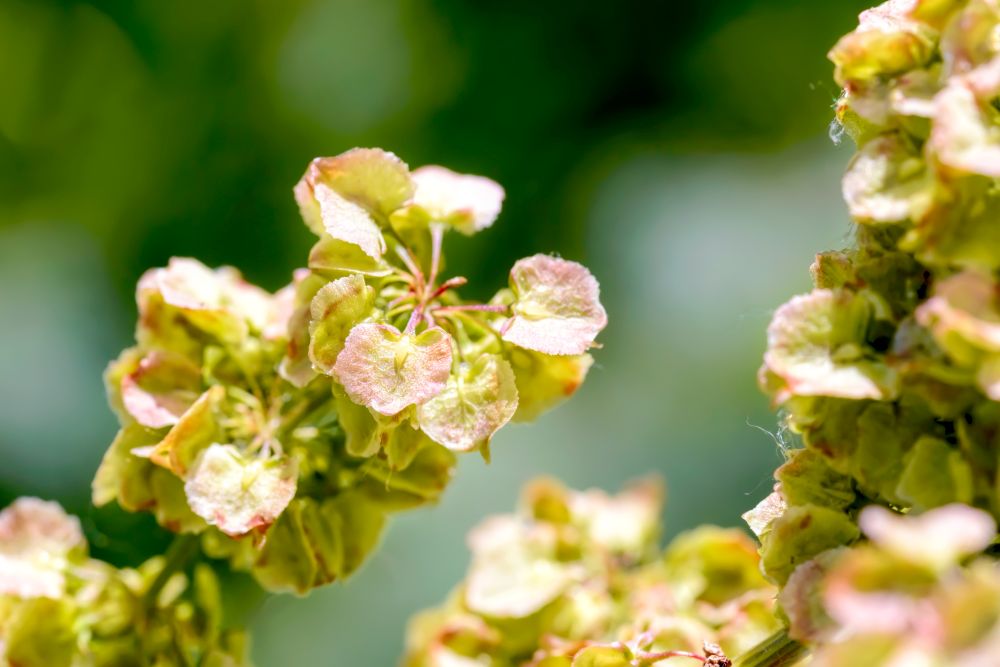
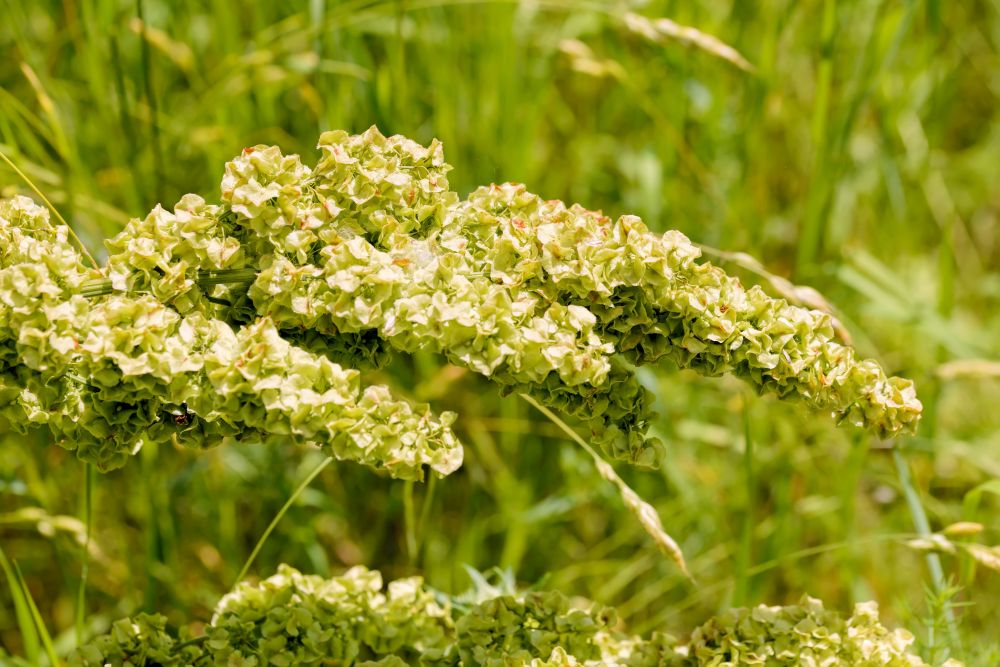
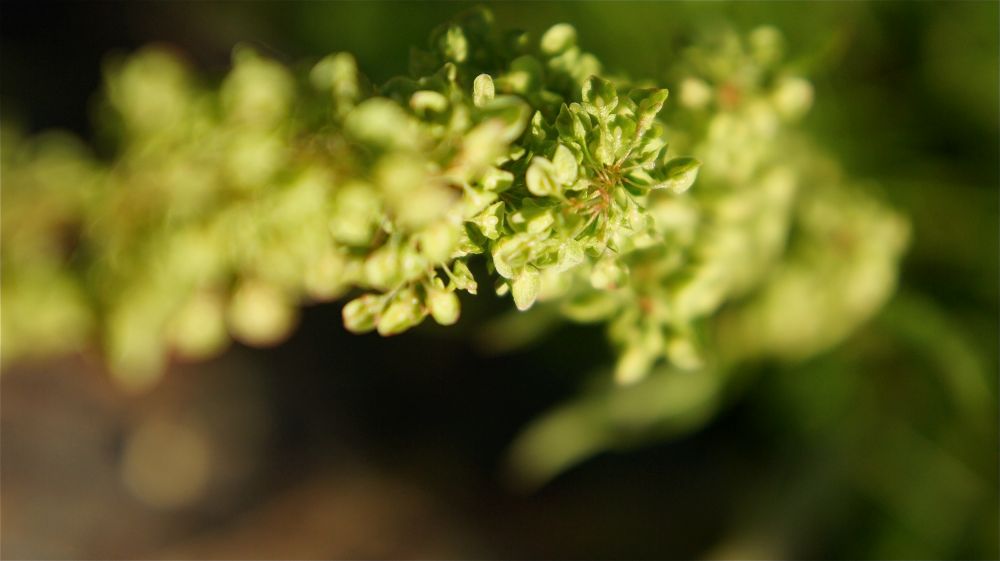
The stem itself is usually woody and ribbed. It grows to upward to 5 feet tall, and flowers bloom at the top of that stem. They are usually a little greenish and tiny, then they don't add whatever ornamental value to the plant itself. Clusters of about 25 flowers flower like a small awning at the top.
After the flowers pollinate in the autumn, they are replaced by seed pods. The seeds are ofttimes egg-shaped with abrupt points. Each seed is often enveloped by a dark-brown capsule. Curiously, the seeds never drop and remain hanging on the establish throughout the winter until the side by side spring. This is one surefire way to identify the yellow dock plant in the wintertime, even when the leaves are dead.
Uses of Yellow Dock
If history has taught us anything, it's that humans find many uses, fifty-fifty for the most lethal of plants. The yellow dock is no exception. Toxic as the herb is, that hasn't stopped many people from trying the herb in many dishes and recipes.
But fifty-fifty before it was used for sustenance, yellow dock, first and foremost, has always been a medicinal plant. From roots to stems, flowers, and leaves, medicine men of ancient times have plant medicinal benefits to each part of the plant. Here are some of those medicinal uses of yellow dock.
- Laxative: The roots of the herb are usually yellow due to high concentrations of anthraquinone in them. This organic chemical compound is known for its laxative effects. Doctors have always prescribed the roots in small amounts to treat people who suffered from constipation.
- Soothing: The roots as well have a soothing effect on the lining of the intestines, thus making them a good treatment for irritable bowel syndrome disease.
- Diuretic therapy: Some other medicinal benefit of the found has to do with increasing the urine menstruation for patients.
- Digestion: Yellow dock as well improves the bile product in the body, which in turn improves digestion and helps with bloating.
- Urinary Tract Infections: In improver to improving urine flow, extracts from the plant have proven benign against urinary stones and other infections related to the urinary tract.
- Skin Conditions: Boiling the roots and stems of the herb to extract the active ingredients have treated eczema, nettle rash, and psoriasis.
- Articulation Inflammation: People take suffered from gout and rheumatoid for as long as their achy joints. Luckily, the concoctions fabricated from xanthous dock take eased the pain of arthritis and rheumatoid.
Since the stalk of the yellow dock is woody, the just way to excerpt the active compounds out of information technology is by decoction. That means information technology has to be boiled for long periods of time instead of infusing it, equally is the case with more sensitive aromatic herbs.
Harvesting Curly Dock
If you come across the curly dock, chances are you will exist interested in its culinary values more than its medicinal benefits. And for that purpose, you'll exist more interested in the green leaves and stem of the plant rather than the flowers, roots, or seeds.
The best time to go foraging for curly dock leaves is in the early spring. That's when the leaves are still young and dark-green. Keep in mind that the younger and more tender the leaves and stems, the sweeter and more flavor-packed they are.
In general, people like to compare the leaves of the xanthous dock to spinach. But since the leaves of the herb are rich in oxalic acid, they accept more seize with teeth than spinach leaves. Yous might besides observe that the taste of the leaves will vary depending on the soil and weather weather. A patch of yellow dock growing in fertile soil among pine copse, for example, will gustation more than exquisite than those growing in a bog or near stagnant h2o.
Another trick is to get the leaves earlier the plant shoots out the cardinal stem. They become hard and bitter, and no amount of cooking will alter their taste. As for the stem, it starts tender and succulent. So you tin harvest that as well and use it either raw or cooked.
The stem starts to abound in the belatedly jump or early summer. When y'all cut it, you'll need to peel off the tough, stringy layer covering the ribbed stalk. The flesh inside is greenish, succulent, and crisp. Yous can steam it or sauté it if yous don't like the raw taste.
Yellowish Dock Command
Despite all of these benefits and uses of yellowish dock, the herb has a dark side to information technology as well. Likewise existence an invasive plant, it is likewise toxic. We're non just talking most the brown leaves of woody stems after flowers bloom. Even the tender green leaves accept proven to be toxic for dogs. The same oxalic acid that gives it its distinct sour taste is the same component that makes information technology poisonous for dogs.
Non merely that, but contempo studies evidence that high concentrations of oxalic acrid in the body foreclose arresting calcium and iron. So you shouldn't eat the leaves in big quantities even if you lot melt them.
With that out of the style, what can you do if you discover that xanthous dock growing in your garden? The kickoff matter y'all should do after identifying the herb correctly as the curly dock is to pull it out of the soil. Here'south how you tin can exercise information technology in easy steps.
- Identify a fence around the plant to prevent children or pets from having access to the plant.
- Vesture protective gear, including thick gloves and middle goggles, to protect your peel against accidentally brushing against the plant.
- Utilise a spade to dig up a deep hole effectually the plant. The herb has a long taproot that penetrates deep into the soil.
- Keep post-obit the yellow roots of the plant until you lot've dug a deep hole and you managed to loosen upward the roots.
- Concur the thick roots of the plants with both hands and pull at information technology gently. Exist careful not to suspension the roots since they will abound again if left in the soil.
- When you lot feel the roots yield under pressure, pull them upwards and out of the soil.
- Do the same for all the yellow dock plants y'all observe in the garden.
- Rake the garden for any fallen seeds. They can easily sprout by the adjacent bound.
- Gather the plants and seeds at a corner of your property and fire them.
Treating With Curly Dock
As a gardener, yous probably have had more than your fair share with brushing against undesirable and nasty plants. One of these nasty plants is Urtica dioica or, as it'due south usually known, stinging nettles. Even a slight scratch will trigger a painful rash that could stay for days if left untreated.
There are many ointments and creams you lot can get at the drugstore to treat such a painful rash. Just if y'all're out in the wilderness by yourself, then you lot'll take to find a homemade remedy shortly. That's where curly dock comes in. 1 of the medicinal benefits of the plant is its soothing qualities. It treats rashes equally well as eczema and other peel atmospheric condition.
So look effectually you lot for a young curly dock plant with light-green leaves. Gather a few of these tender leaves and rub them vigorously in the palm of your manus. This will break the outer skin of the leaves and release the sap inside. Make a ball of the crushed leaves and apply information technology immediately on the scratch or cutting caused past the fine hairs of the stinging nettles. The pain would subside downwards when your skin absorbs the juices of the curly dock leaves.
Don't try this with the brown leaves of the herb. They're often also hard and dry out to be constructive as a handling against rash or hurting.
Source: https://www.diys.com/yellow-dock-herbs/
0 Response to "Yellow Dock Herbs: Uses And Control Of Curly Dock Plants"
Post a Comment